The Advantages of Tankless Water Heaters

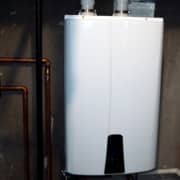
Is it time to replace your water heater? Have you considered getting a tankless water heater for your home instead of the traditional tank-style water heater? There are a number of advantages to choosing tankless, or on-demand, water heaters which make them the right choice for many homes. 

Benefits of Tankless Water Heaters

Energy Efficiency – Tankless water heaters are more expensive to purchase, but they are less expensive to run. This is because they only heat water when you need it, instead of heating it and storing it like a traditional water heater does. Since the water is not heated and reheated, less energy is required. This can result in considerable energy savings over time, especially for families that use a moderate amount of hot water. In the long run, you will save money on your utility bills. 

All the Hot Water You Need – If your family takes a lot of showers or does a lot of laundry, and you’re always running out of hot water, a tankless water heater is the solution. It supplies water continuously, on demand. As long as the unit is the right size for household needs, you will not run out of hot water. Ever. 

Longevity – How long a water heater will last varies, depending on the type of water heater, the quality of the unit, and how well you maintain it. However, traditional tank-style water heaters last 8-12 years on average. Tankless units have a longer lifespan, typically around 20 years or more if they are properly maintained. 

Better Water Quality – Because there is no tank to store water in, the hot water generated by tankless water heaters will not contain the rust, scale, or sediment build up. Tankless heaters are not suitable for homes with really hard water, though – unless you install a water softener. 

Space-saving Design – A typical tank-style heater takes up a fair amount of space, can’t be installed anywhere that would be destroyed by a water leak, and is unsightly. Tankless heaters can be mounted on a wall and take up considerably less space. This allows for greater flexibility of use in smaller homes, apartments, condos, or anywhere without a basement or storage area. They’re also much less likely to ever leak and create a big water mess in your home. 

Advanced Features – Many tankless models come with features like wifi connectivity and smartphone apps that allow them to be monitored and controlled remotely. Homeowners can adjust their settings, set schedules, and receive maintenance alerts very conveniently. 

Should You Go Tankless?

While tankless water heaters are a great option for many families, you should consider how much water your family uses and discuss your options with your plumber before you decide.  Tankless heaters do require 40 pounds of pressure to work properly, so they are better suited for homes with city water than for ones with well water. They are available in a variety of different sizes to meet different needs, and they have a lower carbon footprint which is attractive to consumers who are environmentally conscious. 

If you are thinking a tankless water heater would work for you, please contact us at Weinkauf Plumbing & Heating. We would be more than happy to find one that would meet your needs and install it for you right away. 
 

The Most Expensive Appliances in Your Home

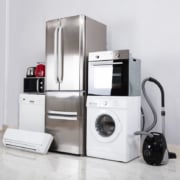
Inflation is hitting everyone in the wallet these days. Utility bills can be anxiety provoking especially when you don’t know what to expect. The costs fluctuate from month to month and season to season. If you dread opening your electric bill, this blog is for you. Here we will discuss which appliances and systems in your home use the most energy so you can decide how you want to use your most expensive appliances – or whether you want to replace them with more energy efficient models. 

Which Appliances Are Most Expensive to Operate? 

#1 Your HVAC System

Heating and cooling account for nearly half the energy used in most homes. An electric furnace will, of course, use more electricity than a gas one, but a gas furnace that runs inefficiently will still run up your electric bill. Your air conditioner should also be in top condition if you want lower bills during the summer months. At Weinkauf, we recommend changing your air filter regularly because a dirty filter will force your HVAC system to work harder and use more energy.

We also recommend that you have a professional check and maintain your HVAC system at least once a year so that it runs smoothly and efficiently at all times. If your furnace is older than 10 years, you could realize significant energy savings by replacing it with a more energy efficient model

We can also upgrade your thermostat to a smart thermostat that will learn your temperature preferences and allow you to reduce HVAC use when you are sleeping or not at home, saving you money over time. 

#2 Your Water Heater

An electric water heater can account for up to 15 percent of your home’s total electricity use. Whether gas or electric, a traditional water heater uses energy continuously in order to provide you with hot water when you need it for washing or bathing. Insulating your water heater tank and pipes can reduce heat loss. Or you could upgrade to a tankless water heater which will supply limitless amounts of hot water when you need it without the energy waste lost during storage. 

#3 Your Washer and Dryer

Laundry and dishwashing are daily tasks that require time and energy. They also account for up to 12 percent of your energy use. To conserve resources, save running your washing machine or dishwasher until you have a full load, and wash more of your clothing on the cold cycle. 

#4 Your Home’s Lighting 

In Michigan we can’t rely on only solar energy for light or heating, but using natural light whenever possible will help lower your lighting costs. Turn off lights when you are no longer using them, and nag your kids to do the same. It’s also good to replace your traditional incandescent light bulbs with LED bulbs which are more energy efficient and last longer. 

#5 Your Stove and Refrigerator

Newer appliances are more energy efficient than older models, particularly ENERGY STAR products, but if you’re not ready or able to replace your stove or refrigerator, keep them cleaned and maintained so they can operate as well and effectively as possible. 

Most of the other personal appliances or devices in your home are not as energy intensive. While it’s always good to turn off televisions or computers when you are not using them, they simply do not take as much energy to run as air conditioners or water heaters. If you see your utility bills rising, you should focus on which of your larger appliances are no longer in top condition and maintenance or upgrade them. By identifying the most expensive appliances in your home, you can reduce your energy consumption and your bills.

There are ways to reduce your utility costs and save money every month. If you have questions about your HVAC system and its efficiency, please contact us at Weinkauf Plumbing & Heating. We would be happy to discuss your options with you and make recommendations for repairing or replacing your furnace, your A/C, or your water heater. 


Air Conditioner Repair – Do You Repair or Replace?

Spring in Michigan can make a slow start, but once the weather heats up, you will want your air conditioner to be operating at full capacity. The combination of heat and humidity can be tough. This is why having your air conditioner checked out before the temperatures rise is a wise decision. If your AC is not working properly, you may wonder if you should repair your unit or replace it entirely. This is not an easy decision for a homeowner on a budget to make, so in this blog we will talk about the different factors to take into consideration when choosing between air conditioner repair or replacement. 

Air Conditioner Repair vs. Replacement

Before you decide to repair or replace, here are the factors you should consider: 

The Age of the Unit – Older AC units often require frequent repairs. Newer units may only need small repairs over time to keep operating at capacity. However, if your air conditioner is more than 10 years old, you may save money by replacing it rather than continuing to make expensive repairs. 

If the repair will cost more than half of the price of a new unit, it’s probably better to replace it. In fact, HVAC professionals have a simple formula they use to make these determinations: Multiple the age of the unit by the cost of the repair. If the total is greater than $5,000, it’s better to replace it. This is especially true if you’ve had to repeatedly repair it in the last several years. 

Frequency of BreakdownsIf your air conditioner is breaking down frequently, it may be a sign that it’s time to replace it. Your air conditioner might have underlying issues that are not easily repairable. Lifetime cost analysis is important here. Your service technician can help you determine what the best return on your investment would be. 

Energy Efficiency – Newer air conditioners are generally more energy efficient than older units, which will mean lower energy bills for you. Choosing an ENERGY STAR certified air conditioner means you can improve the comfort of your home while saving energy. It will also protect our climate and air quality by helping prevent harmful carbon pollution and reducing other greenhouse gases.

Many older units still use R-22 refrigerant which is damaging to the ozone layer and is being phased out. Because this refrigerant is becoming harder to acquire, these units will be more expensive and harder to fix in the future. 

HVAC technology is rapidly improving, and there are many types of air conditioning improvements you can make to cool your home while saving energy, including smart thermostats that can diagnose and troubleshoot HVAC problems, variable-speed and variable-capacity units, and zoning technology that lets you control temperatures in different sections of your home. We can all feel good about minimizing energy waste.

Comfort – If your current air conditioner is not able to keep your home consistently comfortable even after repairs, it’s time to replace it. In addition to temperature and humidity, you know how your air feels. That’s important. You want to feel comfortable in your home and rely on the air being reliably cooled when summer blasts you with its full force. 

Are You Ready to Replace Your Air Conditioning System? 

Your new AC may qualify for discounts and savings, including tax credits from the federal government and rebates from your local utility company. These can add up to thousands of dollars in savings. If you just got a tax refund, you can use that to update your HVAC system too.

If you are considering updating your air conditioning, Weinkauf Plumbing & Heating is here to help you find the perfect system for your home. Our experienced technicians will take into account your home’s layout, ductwork, windows, and doors and make recommendations for a system that will revolutionize your comfort. If, on the other hand, based on the above factors, you decide repairing is a better option for your home and budget, we can do that too! Call us today for help with any heating or cooling problem you have.


What Kind of Pipes Are in Your Home?

Do you know what types of pipes are in your plumbing system? Are you planning to renovate your bathroom or build a new home? If you don’t know much about plumbing or pipes, we’ll go through the main types in this blog so you can make decisions for your home plumbing with confidence. 

Different Types of Pipes

There are a number of different types of pipes that can be found in residential buildings. Over the years, plumbers have come to use different materials as some of the newer types have advantages over the ones originally installed in older homes. Each type has its own uses, benefits, and disadvantages. 

The principle types of pipes being installed today are:

  • Galvanized steel
  • Copper
  • PVC and CPVC
  • PEX
  • ABS

Older homes tend to have more galvanized steel pipes. This is steel coated with a layer of zinc to protect it from corrosion, and this type of pipe was and is often used for water supply lines (for water not meant for drinking). 

There are several downsides to using galvanized steel piping. It’s heavy, and it can be difficult to work with. Galvanized steel also rusts over time and has a tendency to clog, which is why it’s no longer used for potable water. This type of pipe has a lifespan of 20 to 50 years and will need to be replaced. 

Copper is a very popular material for pipes and is commonly used for water supply lines because of its durability and resistance to corrosion. It comes in different thicknesses and can be flexible or rigid. Rigid copper piping is used in long extension pipes, whereas flexible copper piping is used in smaller spaces where it may need to be run around various types of building elements. 

PVC (polyvinyl chloride) pipes are made of vinyl and plastic and used most often for drain, waste, and vent systems. They have a number of advantages over metal pipes in that they are affordable, lightweight, easy to install, durable, and are resistant to corrosion. This explains their growing popularity. 

CPVC (chlorinated polyvinyl chloride) is the same type of pipe as PVC, but it’s treated with a chemical to allow it to withstand higher temperatures and resist warping. It’s available in a wider variety of sizes than the untreated PVC. CPVC is ideal for high-water-pressure applications. Both PVC and CPVC are put together using glue instead of soldering. 

PEX (cross-linked polyethylene) pipes are a flexible and easy-to-install alternative to traditional copper or PVC pipes. They are frost resistant and typically used for water supply lines. Unlike PVC and CPVC, PEX piping is flexible so it can be used on longer segments where PVC or CPVC would need to be cut and glued. This makes it ideal for small spaces with other construction elements. PEX pipes are connected with clamps and do not need to be soldered or glued. This type of pipe is heat resistant and affordable, but the material can cause an odor in water. It can also only be used indoors. 

ABS (acrylonitrile butadiene styrene) pipes are similar to PVC pipes but are more durable and resistant to impact. They are commonly used for drain, waste, and vent systems.

Other types of pipes that are outdated but still found in many older homes are cast iron and polybutylene and high-density polybutylene pipes – all of which plumbers will recommend be replaced. Cast iron pipes can last a long time, but they are subject to rusting and clogging. Polybutylene and high-density polybutylene pipes were discontinued for plumbing use because they had a tendency to leak. 

Choosing the Best for Your Home

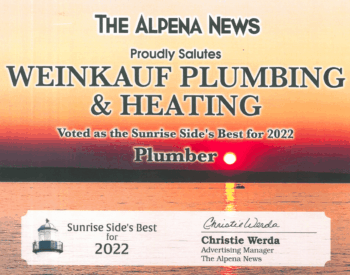
Weinkauf Plumbing & Heating was named Best Plumber in Alpena in 2022. When you call us with your plumbing needs, our trained plumbing professionals will provide expert guidance on the most suitable materials for the job according to your application and budget. All of our recommendations will be made with the idea of ensuring your plumbing continues to work seamlessly for as long as possible. Call us today at (989) 354-5427 for help with your project or renovation. 


How To Prevent Burst Pipes

Winter in Michigan is never dull. The weather runs the gamut from beautiful soft snowfalls to ice squalls and bitter, below-zero temperatures. People and plumbing have to be tough enough to keep up with it. During an extreme weather event like a polar vortex, pipes bursting can be a real threat. Burst pipes can cause significant damage in a very short period of time. Let’s go over what they can do and how you can be proactive to keep your pipes from freezing. 

Frozen Pipes Are a Homeowner’s Nightmare

When a pipe freezes and breaks from the pressure of the water inside, so many things can go wrong. Water can be tremendously damaging. If the broken pipe is in a hard-to-access area or around electrical wiring, it’s even worse. If the water is not turned off right away, it can quickly flood the home and cause damage to the structure and its contents. 

Perhaps the most immediate danger is if the water comes in contact with the home’s electrical system or starts a fire. If you have a pipe break in your home, you should not only turn off the water at the entrance to the house, you must shut the electricity off in any of the affected areas and call an electrician (after you call a plumber). 

If enough water floods the home, it can weaken the walls, collapse ceilings and floors, and even damage the foundation. If it’s not immediately remediated by a professional, it can also create a breeding ground for mold and bacteria which is difficult to remove after it takes hold in a home. 

All of this repair work is very expensive for a homeowner. Replacing belongings is another cost, and in some cases, the owners have to find alternative housing while the home is being repaired. 

How To Prevent Burst Pipes

Fortunately, there are actions you can take to protect your home or cabin from this terrible outcome. 

First, the homeowner can insulate the pipes by wrapping them with heat tape or foam sleeves to keep them from freezing if the temperature drops. Make sure that any area of the home that has pipes running through it is adequately insulated. 

If you are going to be away from your home or cottage for a longer period of time, do not lower the thermostat below 55 degrees. Fifty-five degrees is cool enough to save on energy costs, but warm enough to protect your home from excessively cold temperatures. Turn the water off at the entrance to the house and open the faucets to allow the faucets to drip. Running water is less likely to freeze than standing water. It’s also helpful to ask a friend to stop by and check periodically to make sure the furnace has not failed and everything looks good. 

Have your plumber inspect your pipes from time to time for leaks or weaknesses and repair anything that they might find right away. Regular maintenance keeps problems from becoming emergencies.

If you are stuck without electricity and/or heat for any extended period of time, shut the water supply off to your home, and open your faucets. If your home does freeze, do not try to thaw your pipes with an open flame. Call a plumber if you see any evidence of leaks. Otherwise, wait until the home heats up again to turn the water back on. It’s always useful to have the number of a plumbing professional on hand in an emergency.

If you are worried about pipe leaks or need emergency plumbing services, call us at Weinkauf Plumbing & Heating. We are available 24 hours a day for emergencies, and we are ready to help. Winter is tough, but with a little preparedness, you can prevent burst pipes even in the harshest of weather. 


Customer Service Is Our #1 Priority

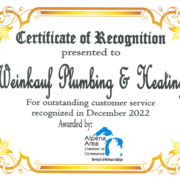
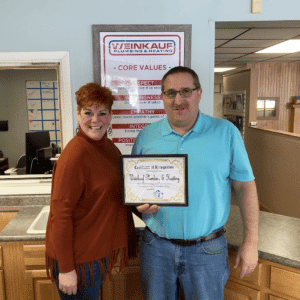
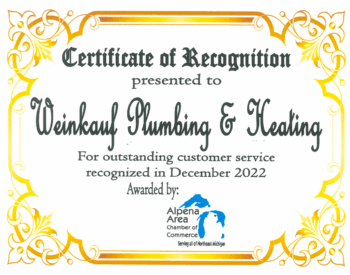
We are proud to announce that Weinkauf Plumbing & Heating was recently featured by the Alpena Area Chamber of Commerce for our customer service. The Chamber awarded us a certificate of recognition. Weinkauf always makes our work with customers our top priority, so we are happy to see that being noticed. 

Weinkauf customer service

Why Is Customer Service So Important? 

At Weinkauf we work with our team of service professionals to hone their customer service skills. Our goal is to exceed your expectations for service. This is important because even though we sell products like furnaces, hot water heaters, and toilets, it’s really the installation and maintenance of those products that makes a difference to your comfort. You invite us into your homes and businesses to do our work, and we want to make that a pleasant and rewarding experience for you. In order to do that effectively we have focused on the following: 

Listening – Before we start work, it’s our goal to listen and understand what the problem is and the limitations you may have in solving it so we can recommend appropriate and affordable solutions. 

ResponsivenessEmergencies happen. In fact, any furnace or plumbing failure will feel like an emergency pretty quickly. Our emergency number is 989-354-5427. Don’t hesitate to call! We are ready to quickly address your plumbing or HVAC problem so you can go back to living your life without that added stress.

Proactivity – We consider it part of the job to anticipate our customers’ needs if possible and take steps to prevent issues from arising in the first place. This often means recommending additional products or maintenance to stop a problem from becoming a problem. 

Consistent Service – All of our customers are valued customers and receive the same high standard of care. 

To meet these goals for service we train our staff, providing them with the knowledge, skills, and tools they need to effectively handle customer concerns. We also focus on feedback and continuous improvement, developing our team’s skills and abilities. 

Many of our customers have noticed our customer service efforts and left reviews for us on our Google profile. If you’re unsure of who to call to fix your clogged sink or broken air conditioner, take some time to read the reviews there from over a hundred satisfied customers.

Weinkauf services all existing HVAC and plumbing products as well as the ones we sell and install. Call us anytime with questions – our service vans are stocked and ready to roll. We want to be your choice for plumbing and heating professionals in the greater Alpena, Michigan area which is why we make customer service such a high priority. 


Furnace Failure: Why Isn’t Your Furnace Working?

It’s winter, and in Michigan that means we very much need our furnaces to provide us with consistent heating for us to stay warm and comfortable. Some winters, like this one, are more challenging. If you have an unreliable furnace, it can cause a lot of anxiety. Let’s go through some of the reasons your furnace might fail. Some of them you can fix yourself, and others will require the help of a trained professional

Reasons for Furnace Failure

If your furnace isn’t working, one of the following problems may be the cause. Let’s start with the most basic:

Your thermostat is not on – Sometimes something can happen to alter the settings of the thermostat. Whether this is a human or tech error, if your furnace isn’t working, check the thermostat settings to make sure that it is on HEAT mode and the temperature is set a few degrees higher than the current room temperature so you can see if it turns on. It’s possible that your batteries have lost their charge or, if your thermostat is hardwired, a breaker has tripped. Check the batteries and your circuit breaker to make sure. If you’ve experienced this problem more than once, you may have a problem that an HVAC technician will have to diagnose.

Your air filter is cloggedA very dirty air filter can result in the furnace overheating and shutting off as a way of preventing a fire hazard. Check your air filter and replace it if it is full of dirt. Once your furnace has cooled down, you will see if this fixes the problem. 

There is an air-flow blockage – Other blockages can also cause the furnace to overheat and shut off. If you have items blocking your furnace, clear six feet of space around it. Check to see if all of the vents in your home are open and unblocked so that air can circulate through them. 

If your furnace is turning on and then off again after a short period of time without heating the house, this is called short cycling. It’s frequently caused by clogged air filters or airflow, although it can also be caused by a mechanical problem. If your furnace is short cycling, call an HVAC professional because this can cause damage to the furnace if it continues for too long. 

A part is malfunctioning – Your furnace is made up of a number of parts that all have to function correctly and in tandem for it to work. These parts get dirty over time, lose their lubrication, or simply get worn down or break. If your furnace is not working, your HVAC professional will examine the:

  • Burners 
  • Bearings
  • Igniter
  • Limit switch
  • Control board
  • Heat exchanger
  • Flame sensor
  • Gas line
  • Circuit breaker

The problem could involve one or more of the above. If you have no experience with furnace care, you should call a professional instead of tinkering with it yourself. A gas furnace that is not operating properly can allow combustion fumes to accumulate and cause a carbon monoxide leak. Any kind of gas leak in the house is dangerous, especially during wintertime when people’s houses are closed up and no new air circulates in the house. If you notice an unpleasant smell or you see surfaces in your home getting noticeably dirtier, your furnace has a problem that needs to be corrected right away. Call an HVAC professional. 

At Weinkauf Plumbing & Heating we are available for all of your heating needs any time. If you are in the Alpena area and have a furnace emergency, don’t hesitate to call us at (989) 354-5427. We will send someone out right away to diagnose and fix your furnace failure. 


Weinkauf Wins 2 Best of the Best Awards!

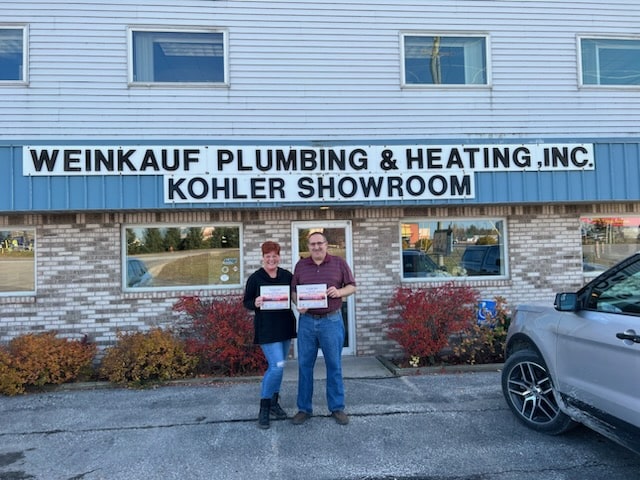
Weinkauf Best of the Best winners

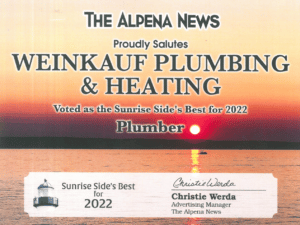
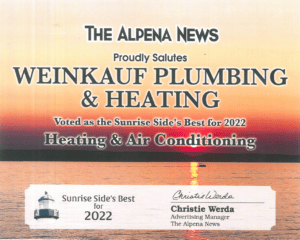
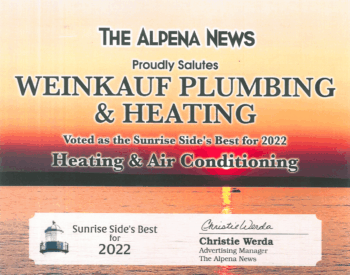
Weinkauf Plumbing & Heating is excited to announce that we were named as “Best of the Best” in two categories by The Alpena News. We were voted the Best of the Best Plumber and Best of the Best Heating & Air Conditioning

Best Plumber in Alpena 

Weinkauf has been helping people in the Alpena area with their plumbing needs since 1959. We are a certified team of State of Michigan licensed master and journeyman plumbers. We work with many local licensed and insured building contractors to help you get your new construction or remodeling projects completed.

With our showroom and professional staff, we can help you with a simple faucet replacement or install all of the plumbing in your new house. Stop in and visit our showroom today to start planning your kitchen or bathroom remodel.

Best Heating & Air Conditioning in Alpena 

Best of the Best heating and air conditioningAs a full-service HVAC company, we’re a one-stop shop for all your heating and cooling needs. We’re fully staffed by experienced, well-trained service technicians who are equipped to take on any residential or commercial task. Call us for a free in-home quote to replace, repair, or upgrade your heating and cooling system

As the staff and owners of Weinkauf Plumbing & Heating, we would like to thank the Alpena community for their support and The Alpena News for the recognition. We would also like to congratulate the other winners on their wins. There are many very fine businesses in the community, and we are proud to be considered one of them. Contact us today for all of your plumbing and HVAC needs! We are always here for you. 


Planning a New Bathroom? Involve Your Plumber Early!

Are the bathrooms in your home doing what you need or want them to do? If you have a bathroom that needs to be renovated or completely overhauled, it’s wise to involve a professional plumber early on. You do not want to invest your hard-earned money only to find you’ve made costly mistakes that need to be fixed down the line. If you’re planning a new bathroom, call your plumber first! 

What Do You Need from Your New Bathroom?

Indoor plumbing has been a feature in most American homes for only a century – or less. In the beginning, bathrooms were simple and practical, just the basics. Over time, they have evolved into much more as more Americans seek to relax and pamper themselves in a luxury setting with luxury features. Nothing eases away stress like a good soak in a spacious bathtub or a hot shower after a long day. 

In fact, in terms of adding value to a home, bathrooms are very important, only second to kitchens. Even a smaller space can wow guests or prospective buyers when done properly, with style and flair. 

But whether you’re planning to do a complete bathroom makeover or just to put in a new shower, you will want to consult your plumber early on. He will be able to advise you on the practicalities of your current plumbing and how it can best be modified.

Why Do You Need a Plumber? 

It may seem simple to add a new bathroom, but the process can be more complicated than you think, especially in a compact space. Professional plumbers have both the knowledge and the technical skills to make the process simpler and better for you. They can assist you in the design phase by advising you on what options are possible without major alterations like moving water lines. They will be aware of building code regulations and will understand when permits are necessary and how to get them. 

A plumber can inspect your pipes beforehand. Like everything else in a home, pipes age and do not last forever. A home renovation is an excellent time to inspect pipes because they will be more accessible. If there are problems, they can be fixed beforehand, eliminating the risk and high cost of a pipe burst or leak at a later time. 

Involving a plumber will also make the process faster. Renovating a bathroom means that for some period of time that bathroom will not be used. Involving a skilled, experienced plumber will make the process go faster, shortening the downtime and the inconvenience. 

A plumber is an expert voice on upgrades, fixture efficiency, plumbing condition, and code regulations, as well as a skilled technician who can complete the work quickly and correctly the first time. If you are thinking of doing a renovation or putting in a new bathroom, talk to a plumber early on in the process. You will thank him for saving you hassle, money, and time. 

If you are in the Alpena area, Weinkauf Plumbing & Heating wants to be your professional for all of your full-service plumbing needs. Contact us for assistance any time. We are ready and waiting to help. 


Change Your Air Filter to Keep Your Furnace in Good Condition

Regular home maintenance is part of responsible homeownership. It helps ensure that all of the parts of your home that keep your family comfortable are working correctly. One regular maintenance task that should not be skipped is changing the air filter on your furnace. This quick, inexpensive task impacts your indoor air quality and can mean the difference between enjoying problem-free comfort in your home and paying for unnecessary repairs. 

What Your Air Filter Does

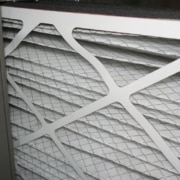
In most homes, especially homes with newer HVAC systems, the heating, ventilation, and air conditioning systems are combined – which means that all the air that comes through the system is filtered by one filter. There are many types of filters, but they all work to prevent air particles of up to 40 microns from entering the system and clogging the machinery. 

When the air filter gets too dirty, the air pressure in the system can drop which causes reduced air flow. The system must then work harder to do its job. Over time, this creates stress and may result in the furnace breaking down and needing to be repaired or replaced. 

A dirty filter can also be a breeding ground for bacteria, dust mites, and mold, especially if it’s in a damp location. Mold spores can spread throughout the entire house via the HVAC system, creating an unhealthy atmosphere and an expensive problem to remediate. 

How Often Should You Change Your Air Filter? 

The rule of thumb is that, for an HVAC unit that sees nearly year-round use, you should change your air filter at least every three months. If your home has many pets or people living in it or if there is a lot of dust, pollen, or other airborne particulate, changing it once a month would be better. 

Different HVAC systems take different types of filters. Most filters are disposable screens that are designed to trap as much air particulate as possible. There are many types of filters that will fit different types of furnace units. Make sure to use the right size filter for your furnace or it will not work properly. If you have questions about where your filter goes or how it is inserted, ask your HVAC professional when you have your furnace maintenance done. 

Adding an AprilAire 1410 air purifier to your furnace unit will help keep the blower housing within your furnace clean. This means that the air within your entire home will also be cleaner. It comes with a healthy air filter that captures more pollen, dust, dander, and mold spores, leaving your air easier to breathe. 

Have Your Furnace/HVAC Serviced Regularly

You should have your furnace serviced at least once per year. A furnace has many moving parts that can break or degrade over time. An HVAC technician will inspect the belts, coils, and fans as well as your ventilation ductwork to make sure everything is working properly and there are no clogs or other problems. 

Changing your air filter regularly and having your HVAC system serviced at least annually will keep your air clean and your air handling system working smoothly. If you have questions about the quality of your air or your HVAC system, call us at Weinkauf Plumbing & Heating. We will be happy to schedule a time to look at your system and recommend solutions to improve the comfort of your home.