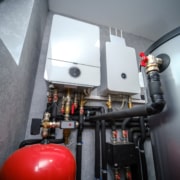
Is a Boiler Heating System Right for Your Northern Michigan Home?

If your home or business doesn’t have ductwork or if you’re tired of uneven heat and dry air from a forced-air furnace, a boiler heating system could be your perfect solution this winter. Here we’ll break down how boilers work, why they’re ideal for Michigan winters, and how to tell if a boiler is right for your home or business.

What Is a Boiler Heating System?

A boiler system heats water instead of air and circulates that hot water through a system of radiators, baseboard heaters, or in-floor piping. This method creates steady, even heat throughout your home or building, and there’s no blowing air or dusty vents involved.

Why Boilers Work So Well in Northern Michigan

Here’s why homeowners and business owners alike choose boilers, especially in older or ductless buildings:

Steady, Comfortable Heat

Hydronic systems radiate warmth evenly through rooms, so there are no more hot and cold spots on your home or building. 

Great for Ductless Homes

Many older buildings in Michigan were built without ductwork. Installing a boiler system means that you do not need to do major renovation to your building, adding a vent system or air returns. 

Less Air Movement = Cleaner Indoor Air

Boilers don’t blow allergens, dust, or pet dander around the house. If you have allergies or asthma, your lungs will thank you all winter. 

Quiet Operation

Boilers operate silently. They don’t kick on and off like a furnace blower, and you’ll get used to the peaceful sound of silence.

Compatible with Radiators and In-Floor Heating

Whether you love the vintage look of cast-iron radiators or the luxury of radiant floors, a boiler can accommodate your design aesthetic and keep you toasty warm at the same time.

Is It Time to Replace Your Boiler?

Boiler heating systems typically last a bit longer than forced air systems. When well maintained with annual service and proper water treatment, they often last 20 to 30 years or more. This is because boilers have fewer moving parts compared to furnaces, so there’s less mechanical wear over time.

Because boiler systems use hot water or steam rather than blowers, they can operate in a gentler way and suffer less from distribution losses like duct leaks and fans constantly cycling. Both of these can stress the mechanics of a system.

If your current boiler is getting to the end of its life cycle, you might be due for an upgrade. Look out for these signs:

  • Uneven or unreliable heat
  • Rising utility bills
  • Leaking or rusting equipment
  • Loud banging or clunking noises
  • Frequent repairs

Today’s high-efficiency boilers use less fuel, heat faster, and last longer, so upgrading could save you money in the long run.

Boiler or Furnace? 

Both systems have their pros. But if you’re building new, remodeling, or looking for reliable heat in a ductless home, a boiler could be the better fit. Here’s a handy guide to help you decide which might be best for your home or business. 
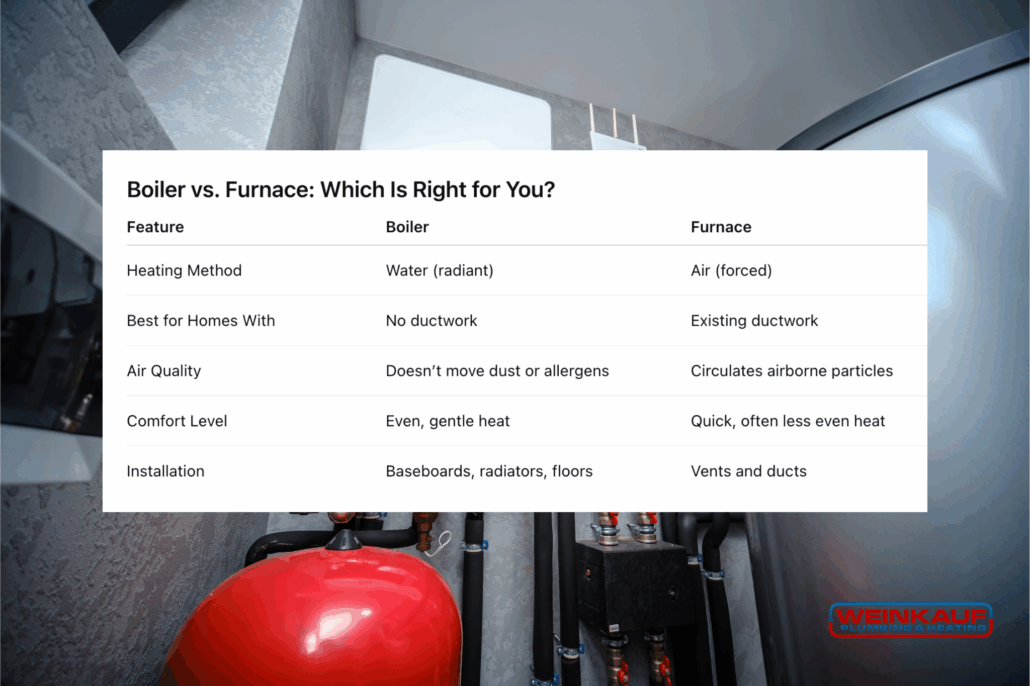
Boiler vs. Furnace

Weinkauf carries boiler systems made by Lochinvar and Weil-McLain. These are two of the most trusted names in boiler technology, and both of these manufacturers’ boiler products offer reliable, energy-efficient heating built to handle tough winters.

Need Boiler Service in Alpena or Oscoda?

At Weinkauf Plumbing & Heating, we install, repair, and maintain boiler systems for homes and businesses in Alpena, Oscoda, and across Northeast Michigan. We’ll help you choose the right system for your space and budget – whether that’s a boiler, a furnace, or a fireplace – so you’ll stay warm all through the coldest, darkest months of the year.

Call us today for a boiler consultation or replacement quote. We’re happy to help with new installations, routine maintenance, or emergency repairs.

It’s Time for Your Furnace Checkup

Fall is here, the leaves have turned, and a chill is in the air. For most people in Michigan, this is the point in the year when their furnace starts to make a very important difference in the quality of their lives. How confident are you that your furnace will work consistently for you through the winter? If you have doubts or would like to avoid a furnace breakdown in the middle of a polar vortex, now is the time to get a furnace checkup. You’re going to want to have the peace of mind regular HVAC maintenance can give you this winter season.

What Happens When Your Furnace Fails

It’s easy to take your heating and cooling systems for granted. When they work the way they are supposed to, your home or business is comfortable – a pleasant place to work or relax. If they break down…that’s when you realize how much you depend on them.

When your furnace fails, the air temperature in your home or business will slowly begin to equalize with the temperature outdoors. If it fails in October, you will be chilly until you can get a professional out to repair it. If it fails in January, you’re going to get very cold, and you may have to find somewhere else to sleep or stay until it’s fixed. The average high temperature in Alpena in Michigan is between 18°F and 26°F. A portable heater or two is not going to keep you and your family warm. 

An even more dangerous possibility with a furnace fail is a carbon monoxide leak. This can result in symptoms such as lethargy, dizziness, headaches, nausea, and vomiting. In the middle of winter, no one has the windows open to let in fresh air, and carbon monoxide poisoning can be a real threat. 

The above reasons are why HVAC professionals recommend having your furnace inspected and maintained every fall. 

Benefits of a Furnace Checkup 

There are many benefits of having your furnace inspected and maintained. First and foremost, there’s the safety aspect. A blocked vent or a cracked heat exchanger can cause a carbon monoxide leak. Prolonged exposure to sub-zero temperature can also cause health problems, particularly for medically fragile people, older people, and young children. 

Secondly, having maintenance performed on your system regularly will save you from more costly repairs. A smaller mechanical issue that goes unfixed can lead to larger, more expensive repairs down the line. Regular maintenance can reduce the risk of furnace breakdown by up to 95%. A furnace is an investment in your own comfort. It’s not a cheap piece of machinery. If you can add to its lifespan by performing annual service, it will save you money overall. 

A furnace that operates efficiently will also lower your utility bills. The more build up your furnace has, the harder it has to work to do its job. In an era of rising energy costs, you want to keep those costs down in any way that you can. Who doesn’t want to save money?

If you neglect your furnace maintenance, you are courting problems. Michigan has long winters, and your furnace is your friend. Take good care of it, and it will perform well and keep you warm and cozy for many years. If you are concerned about how reliable your furnace will be in the coming months, call Weinkauf Plumbing & Heating to schedule a furnace checkup. We will be happy to take care of any of your HVAC needs. 


Winterizing the Plumbing in Your Cottage

It’s that time of year again when the leaves turn a rainbow of colors and frost is on the roof in the morning. There may still be more days to enjoy the beauty of Northern Michigan, but if you do not plan to spend the winter there, winterizing the plumbing in your cottage should be a priority. Here we will go through each step in this process. 

The Process of Winterizing Your Cottage

Water can cause damage, and we often underestimate the extent of that potential damage. Cold weather will freeze any water left in your pipes or fixtures. As it turns to ice, it can expand with so much force that the ice rips a hole in even metal pipes. When the water eventually thaws, either in the spring or during a winter warm up, it will rush through the hole in the damaged pipe and spray out on ceilings and inside walls, over floors and through them. In addition to cosmetic damage to sheetrock and flooring, this can lead to:

  • Ceiling damage
  • Roof damage
  • Mold
  • Electrical problems

It can even affect the structural integrity of the home itself. 

Avoiding the extreme hassle and expense of dealing with extensive water damage is why winterizing is so important when the weather turns cold. You do not want to worry about the condition of your pipes when the next polar vortex occurs. So what exactly is involved? 

Essentially, winterizing involves shutting off the water to your cottage at the water meter, insulating it, and emptying your home of any remaining water. If it’s not there, that means it can’t freeze and burst a pipe. We don’t think of all of the places water can be, though, so below is a rundown. Follow a checklist and work from one end of the water system to the other, and you’ll be less likely to miss a step.

Shut off the power

Turn off the electrical power to the water pump and the water heater. Shutting off the power protects the elements inside the heater so they are not trying to heat water that is no longer present. 

Interior plumbing

If you’re lucky and your cottage’s plumbing was well designed, all of the pipes will drain to one point and the water supply lines will slope down to a single set of drain valves. If not, you may need to crawl around and discover where all the pipes go and the valves are. Open all of the valves and the taps both inside the cottage. These should remain open all winter so any water in the system will drain. 

If you think there could be any water in the pipes, attach an air compressor to the drain valve and blow out the water through the taps. Do not blow more than 35 pounds of pressure, or you could damage the pipes. Every sink, tub, toilet, and faucet should blow clear. A shower may take a little longer to blow out. 

Water heater

Attach a hose to the drain valve of the water heater and drain it completely. If the water heater is outside or underneath the cottage, the hose will direct it away from the heater instead of letting it pool at its base. If there is a pressure or gravity tank elsewhere like in a boathouse, make sure to drain it as well. With a jet pump, remove the drain plug and let all of the water between the pump and the pressure or gravity tank drain. 

Antifreeze

Add one or two cups of antifreeze (propylene glycol) to the jet-pump case to protect the casing and the impeller inside it from freezing. Then pour antifreeze into all sinks, tubs and showers, floor drains, dishwashers, and laundry drains. Toilets will require nearly a gallon of antifreeze. Pour it into the drain tube that’s in the toilet tank until it runs into the bowl and then fill the tank until the flapper is submerged. Top off the toilet bowl with more antifreeze until the hole is covered. A dishwasher will also require a gallon or so of antifreeze to fill up its internal components.

Obviously, this is an involved process, but the time and the small expense is insurance against the much larger time and expense a burst pipe or pipes will cost. It’s worth it to protect your property. If you would like help with winterizing the plumbing in your cottage, call us at Weinkauf Plumbing & Heating. We can get your pipes and plumbing fixtures ready for winter so reopening your cottage next spring will be a breeze!