Is a Boiler Heating System Right for Your Northern Michigan Home?
If your home or business doesn’t have ductwork or if you’re tired of uneven heat and dry air from a forced-air furnace, a boiler heating system could be your perfect solution this winter. Here we’ll break down how boilers work, why they’re ideal for Michigan winters, and how to tell if a boiler is right for your home or business.
What Is a Boiler Heating System?
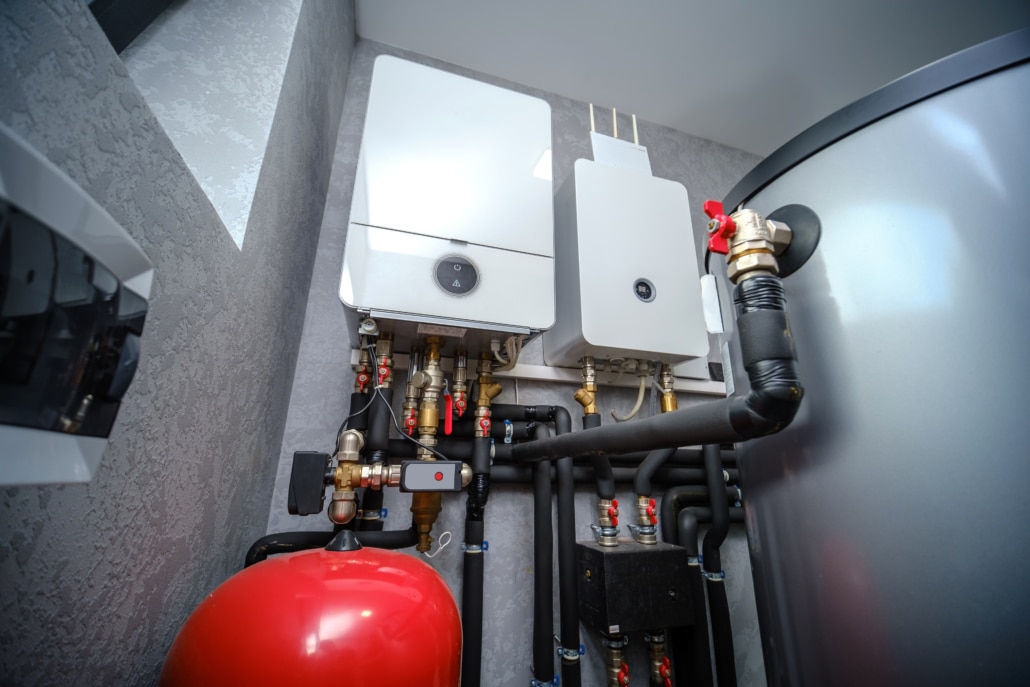
A boiler system heats water instead of air and circulates that hot water through a system of radiators, baseboard heaters, or in-floor piping. This method creates steady, even heat throughout your home or building, and there’s no blowing air or dusty vents involved.
Why Boilers Work So Well in Northern Michigan
Here’s why homeowners and business owners alike choose boilers, especially in older or ductless buildings:
Steady, Comfortable Heat
Hydronic systems radiate warmth evenly through rooms, so there are no more hot and cold spots on your home or building.
Great for Ductless Homes
Many older buildings in Michigan were built without ductwork. Installing a boiler system means that you do not need to do major renovation to your building, adding a vent system or air returns.
Less Air Movement = Cleaner Indoor Air
Boilers don’t blow allergens, dust, or pet dander around the house. If you have allergies or asthma, your lungs will thank you all winter.
Quiet Operation
Boilers operate silently. They don’t kick on and off like a furnace blower, and you’ll get used to the peaceful sound of silence.
Compatible with Radiators and In-Floor Heating
Whether you love the vintage look of cast-iron radiators or the luxury of radiant floors, a boiler can accommodate your design aesthetic and keep you toasty warm at the same time.
Is It Time to Replace Your Boiler?
Boiler heating systems typically last a bit longer than forced air systems. When well maintained with annual service and proper water treatment, they often last 20 to 30 years or more. This is because boilers have fewer moving parts compared to furnaces, so there’s less mechanical wear over time.
Because boiler systems use hot water or steam rather than blowers, they can operate in a gentler way and suffer less from distribution losses like duct leaks and fans constantly cycling. Both of these can stress the mechanics of a system.
If your current boiler is getting to the end of its life cycle, you might be due for an upgrade. Look out for these signs:
- Uneven or unreliable heat
- Rising utility bills
- Leaking or rusting equipment
- Loud banging or clunking noises
- Frequent repairs
Today’s high-efficiency boilers use less fuel, heat faster, and last longer, so upgrading could save you money in the long run.
Boiler or Furnace?
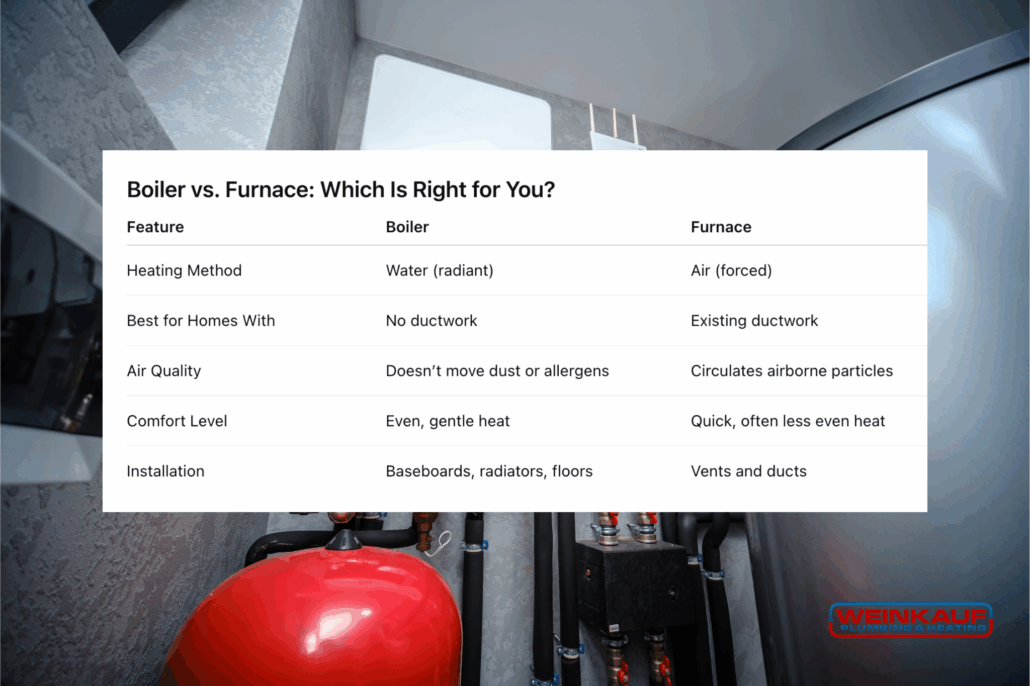
Both systems have their pros. But if you’re building new, remodeling, or looking for reliable heat in a ductless home, a boiler could be the better fit. Here’s a handy guide to help you decide which might be best for your home or business.
Weinkauf carries boiler systems made by Lochinvar and Weil-McLain. These are two of the most trusted names in boiler technology, and both of these manufacturers’ boiler products offer reliable, energy-efficient heating built to handle tough winters.
Need Boiler Service in Alpena or Oscoda?
At Weinkauf Plumbing & Heating, we install, repair, and maintain boiler systems for homes and businesses in Alpena, Oscoda, and across Northeast Michigan. We’ll help you choose the right system for your space and budget – whether that’s a boiler, a furnace, or a fireplace – so you’ll stay warm all through the coldest, darkest months of the year.
Call us today for a boiler consultation or replacement quote. We’re happy to help with new installations, routine maintenance, or emergency repairs.