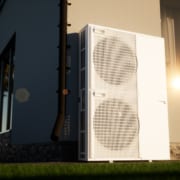
Air-to-Water Heat Pumps: A New Option for Boiler Homes in Northern Michigan
Many homes across Northern Michigan rely on boiler systems for heat. Hydronic heating systems are reliable, comfortable, and well suited for our colder climate. But newer technology is starting to give homeowners additional options to improve their energy efficiency and reduce their heating costs, especially during the milder months of fall and spring. One of those technologies is the air-to-water heat pump.
While this system is still relatively new in the United States, it is becoming increasingly popular during the shoulder seasons.
What Is an Air-to-Water Heat Pump?
An air-to-water heat pump pulls heat from the outside air, concentrates it using a refrigerant cycle, and transfers that heat into water that circulates through a home’s hydronic heating system. Instead of heating air like a traditional air-source heat pump, these systems produce hot water that can be used with radiators, baseboard heating, or radiant floor systems.
For homes that already use boilers, that makes integration much simpler. Rather than replacing the boiler entirely, the heat pump can work alongside it.
Why They Work Well During the Shoulder Season
Heating needs change dramatically between seasons in Michigan. During the coldest winter months, boilers remain one of the most reliable ways to keep homes warm. But during the shoulder seasons, when temperatures are cool but not extreme, an air-to-water heat pump can often handle the heating load more efficiently.
In those conditions, a heat pump can provide much of the heat needed without requiring the boiler to run as frequently. This hybrid approach can help reduce fuel use while still keeping the reliability of a traditional boiler system when temperatures drop well below freezing.
What Is the Shoulder Season?
In Northern Michigan, the shoulder season refers to the weeks between the coldest part of winter and the warmest part of summer. These periods usually occur in early fall and late spring, when temperatures are cool but not extremely cold.
During these months, homes still need heat, but not at the full capacity required in January or February. Outdoor temperatures might range from the 40s to the low 60s during the day, with cooler nights. Because heating demand is lighter, this is when technologies like air-to-water heat pumps can operate very efficiently.
For many boiler homes, a heat pump can handle much of the heating during these moderate periods, while the boiler remains available to provide reliable heat when temperatures drop well below freezing.
A Good Fit for Homes with Hydronic Heating
Air-to-water heat pumps are particularly accessible for homeowners who already have:
- Radiator systems
- Baseboard hydronic heat
- Radiant floor heating
- Modern high-efficiency boilers
These systems rely on circulating heated water through the home, which makes them compatible with the type of heat produced by an air-to-water heat pump. Manufacturers like Weil-McLain have been expanding their offerings in this area as interest in hybrid heating systems grows.
Local Support and Distribution
Another reason these systems are becoming more practical is improved access to equipment and parts through regional distributors. In Alpena, companies like RA Townsend help supply contractors with hydronic heating equipment and components needed for modern boiler systems and emerging technologies like air-to-water heat pumps. Having access to local distribution helps ensure installations and maintenance can be handled efficiently.
Is an Air-to-Water Heat Pump Right for Your Home?
Because this technology is still evolving, it is not the right fit for every home. If you’re considering it for your home, before you decide, factor in:
- Your insulation levels
- Type of heating system already installed in your home
- Size of your home
For many homeowners, the most practical approach may be a hybrid system where the heat pump handles moderate temperatures and the boiler provides reliable heat during the coldest winter days. As interest in energy efficiency grows, systems like this may become more common in Northern Michigan homes.
Talk to a Local Heating Professional
If you have a boiler system and are curious about new heating options, Weinkauf Plumbing & Heating can help you understand what technologies are available and whether they make sense for your home. Our team has decades of experience working with hydronic heating systems across Northeast Michigan and can help you make informed decisions about upgrades and efficiency improvements.
Contact Weinkauf Plumbing & Heating today to learn more about boiler systems, hybrid heating options, and the latest developments in home heating technology.