What to Do If Your Water Heater Is Leaking
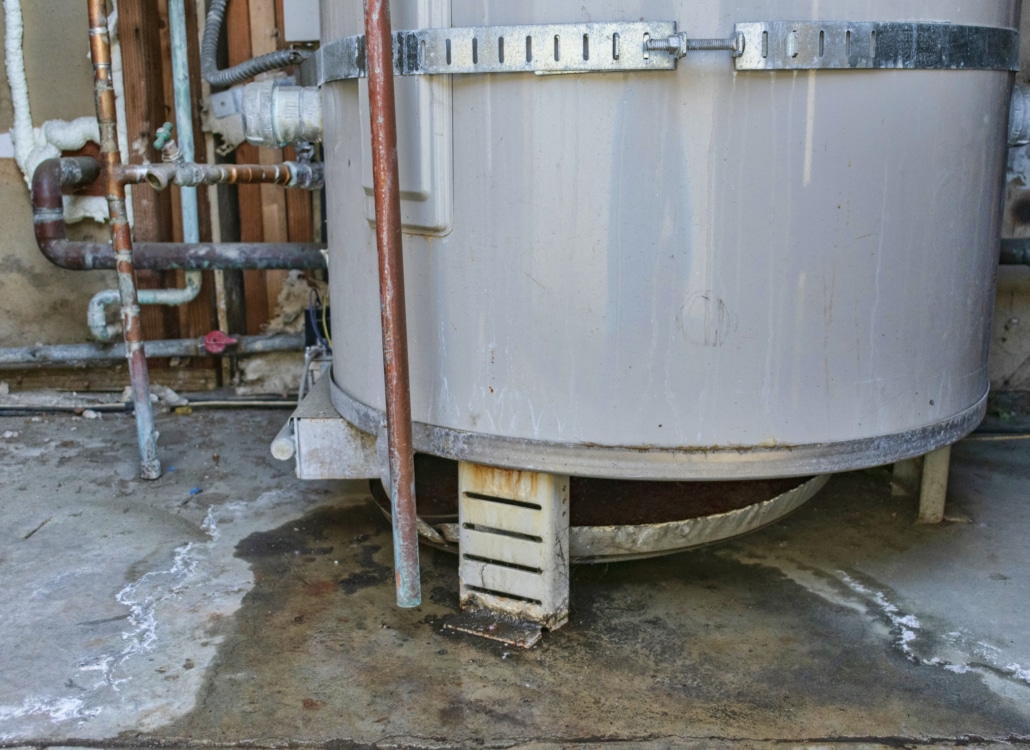
A leaky water heater is not something that any homeowner wants to deal with. All appliance failures are inconvenient and stressful, but this one has the added possibility of causing water damage to your home if left unaddressed. That’s why if you see your water heater leaking, you want to know how to deal with it right away. The first rule is: Don’t panic. Here are the steps to take to avoid or minimize any water damage and figure out what to do to fix your water heater problem.
Your Water Heater Is Leaking – What Now?
Step 1: Turn Off Power or Gas
The first thing you’ll want to do, for safety, is to turn your water heater off. If you have an electric water heater, you’ll need to find your home’s electrical panel and turn off the circuit breaker that powers it. Water and electricity can cause electrocution because water conducts electricity, so always cut your power before inspecting the heater further.
If you have a gas water heater, turn the gas valve (usually located near the bottom of the heater) to the “OFF” position.
Step 2: Shut Off the Water Supply
Next, you’ll want to stop more water from flowing into the tank. Look for the cold water shut-off valve, usually located near the top of the water heater, and turn the valve clockwise to close it. If the valve is stuck or you can’t find it, shut off the main water supply to your house instead.
With the water shut off, you will only have to deal with the water that has already leaked from the tank and what remains inside. You’ll have less to mop up and this will help prevent flooding and damage to the floors or walls nearby.
Step 3: Find the Source of the Leak
Now that the power and the water are cut off, you can determine where the source of the leak is. Common leak points include:
- Cold or hot water inlet/outlet connections (top of the tank)
- Temperature and Pressure Relief Valve (side of the tank)
- Drain valve (bottom of the tank)
- The tank itself
Wipe the water off the tank and watch closely to see where new moisture appears. This can help you pinpoint where the leak is.
Why Is My Water Heater Leaking?
Understanding why your water heater is leaking can help you figure out whether it’s a minor issue or something more serious. Here are some of the most common reasons:
- Loose Connections or Fittings
Over time, the pipes and fittings that bring water into and out of your water heater can loosen or corrode. A small drip at the top of the tank could simply mean that a fitting needs to be tightened or replaced. - Faulty Temperature and Pressure Relief (T&P) Valve
The T&P valve is a safety feature designed to release water if the pressure or temperature inside the tank gets too high. If this valve is leaking, it might be worn out, installed incorrectly, or dealing with excessive pressure inside the tank. - Drain Valve Leak
At the bottom of your water heater, there’s a drain valve used for maintenance and flushing the tank. Sometimes this valve can become loose or start to leak due to wear and tear. - Excessive Pressure Inside the Tank
If your home’s water pressure is too high or your water heater is overheating, it can cause leaks at various points. High pressure puts extra stress on the tank and fittings, leading to drips or even bursts over time. - Tank Corrosion
The inside of your water heater tank is exposed to water constantly. Over time, even with protective coatings, the tank can corrode. Once corrosion sets in, small leaks can develop, and unfortunately, when the tank itself is leaking, replacement is usually the only option. - Sediment Buildup
If you don’t flush your water heater regularly, minerals from your water can settle at the bottom of the tank. This sediment can cause the bottom of the tank to overheat, crack, and eventually leak.
Step 4: Call a Professional
Knowing the cause of the leak is the first step toward getting it fixed and keeping bigger problems from happening in the future. If you’re unsure why your water heater is leaking, call us at Weinkauf Plumbing & Heating right away. We can diagnose the problem and recommend an effective solution.
Even if it seems minor, it’s a good idea to call a licensed plumber to inspect the situation. Our plumbers can to:
- Confirm the source of the leak
- Recommend the best repair or replacement option
- Install new parts or a new water heater safely and up to code
Step 5: Clean Up the Water
If water has spilled onto the floor, use towels, a wet/dry shop vacuum, or a mop to clean it up.
If it’s more than a minor spill, set up fans or a dehumidifier to dry the area and prevent mold growth. Check nearby walls, flooring, and belongings for water damage just in case.
How to Prevent Future Water Heater Leaks
While you can’t predict when a water heater will leak or fail, scheduling regular maintenance of your water heater can extend its life. During our routine maintenance inspections, Weinkauf’s technicians will flush your tank to remove sediment buildup that can corrode the inside. They will also check valves, pipes, and connections for signs of wear or corrosion.
You should also consider purchasing a water alarm. These inexpensive devices sit on the floor and beep when they detect a leak.
A leaking water heater isn’t something you want to ignore, but acting quickly can limit damage and save you money. Whether it’s a simple fix or time for a replacement, Weinkauf Plumbing & Heating is here to help homeowners in Alpena, Oscoda, and the surrounding Northern Michigan areas with their plumbing and HVAC problems. If you need service or a new water heater, contact us today. We’ll get the hot water back working in your home or business in no time.